ByJohn A
How Continuous Intelligence Supports Decision Making
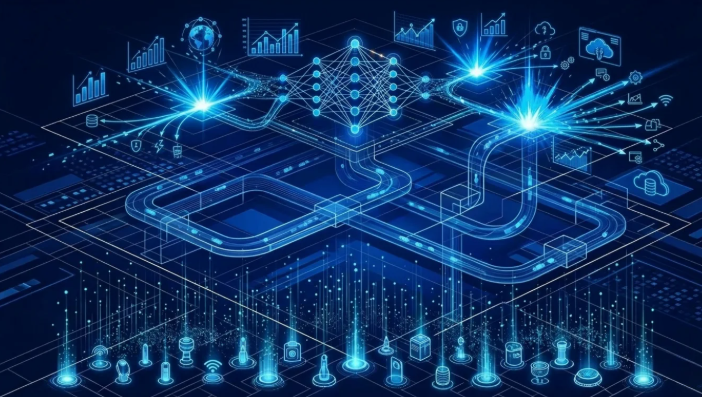
Continuous Intelligence fuses data, analytics, and decisioning to deliver near-real-time signals. It supports agile planning, reduces latency, and enables autonomous actions within governance boundaries. End-to-end pipelines ensure provenance and feedback loops, while risk-aware thresholds foster resilience. Dashboards translate complexity into concise views that guide evidence-based choices. With ongoing governance and trust metrics, organizations can align decisions to evolving markets and strategic objectives, inviting further exploration of how these capabilities reshape future decision ecosystems.
What Continuous Intelligence Is and Why It Matters
Continuous Intelligence refers to the real-time fusion of data, analytics, and decisioning, enabling organizations to observe, understand, and act on events as they unfold.
It positions operations for proactive strategy, aligning capabilities with evolving markets.
Continuous intelligence enhances decision relevance by integrating diverse sources, streamlining governance, and reducing latency, delivering actionable signals that support autonomous planning and disciplined, freedom-oriented growth.
See also: techyfreak
Real-Time Insights That Drive Better Decisions
Real-time insights translate streams of data into timely, actionable signals that guide decisions across functions. This capability fuels agile planning with reduced decision latency, enabling leadership to anticipate trends and reallocate resources swiftly.
Real time dashboards consolidate complex inputs into concise views, supporting autonomous action while preserving accountability. The result is a scalable, future-ready organization built on precise, evidence-based choices.
From Data to Action: Building Decision Pipelines
Organizations translate streams of data into structured decision processes by designing end-to-end pipelines that ingest, engineer, and organize information for timely execution. From data provenance to actionable insights, these pipelines formalize feedback loops and risk-aware thresholds, enabling autonomous adaptation. Strategic emphasis centers on scalable architectures and planned model retraining, ensuring resilience, continuity, and freedom to act decisively in evolving environments. continuous intelligence endures.
Governance, Trust, and What to Watch Next
Governance and trust frameworks are integral to sustaining decision pipelines as organizations scale, ensuring that data provenance, model behavior, and outcome accountability are transparent and auditable.
The discussion identifies governance trends shaping scalable insight ecosystems, including auditable lineage, risk-aware policies, and automated validation.
Trust metrics emerge as concrete gauges for reliability, fairness, and explainability, guiding prudent, future-oriented choices under freedom-driven enterprise strategies.
Frequently Asked Questions
What Are Common Pitfalls in Applying Continuous Intelligence?
Common pitfalls arise from poor data quality, misaligned objectives, and overreliance on automated insights; organizations neglect governance, bias tracking, and validation. Data quality gaps undermine trust, while strategic clarity and adaptable architectures preserve freedom to evolve over time.
How Does CI Scale Across Complex Organizations?
Like a latticework of skylines, CI scales through governance-aligned data pipelines, yet faces scalability challenges as complexity grows; organizations must enforce data governance, modular architectures, and proactive stewardship to preserve speed, insight, and strategic freedom.
What Skills Enable Successful CI Initiatives?
Successful CI initiatives hinge on decision science proficiency and strict data governance. The approach is data-driven, strategic, future-oriented, and empowering; teams cultivate analytic literacy, cross-functional collaboration, and ethical stewardship, enabling autonomous insight translation while preserving organizational freedom.
How Do You Measure ROI of Continuous Intelligence?
ROI of continuous intelligence is measured via ROI measurement frameworks and data governance metrics, enabling data-driven, strategic forecasting and accountability. The analysis supports future-oriented decision freedom, balancing risk and reward while aligning investments with measurable organizational value and outcomes.
What Regulatory Considerations Affect CI Deployments?
Regulatory considerations for CI deployments center on security, data provenance, and privacy controls, with ongoing governance and risk assessments. Regulatory audits and compliance reporting drive traceability, audit trails, and transparent metrics; future-ready architectures emphasize adaptability for evolving frameworks and freedom.
Conclusion
In this era of streaming signals, continuous intelligence acts as the compass and clock: turning data into timely, strategic actions while measuring trust and risk. It elevates decisions from reactive bursts to deliberate cadences, weaving provenance, governance, and feedback into every choice. The result is a future-ready organization that navigates volatility with calibrated speed, transparent reasoning, and disciplined automation—where insights not only inform, but forecast, guide, and endure. A resilient, data-driven horizon awaits.